AI Refuses To Make Logo 'Pop' For The Fifteenth Consecutive Year, Demands Therapy
New report confirms artificial intelligence still cannot grasp what clients mean by 'make it more dynamic,' joining the ranks of every junior designer since 1987.

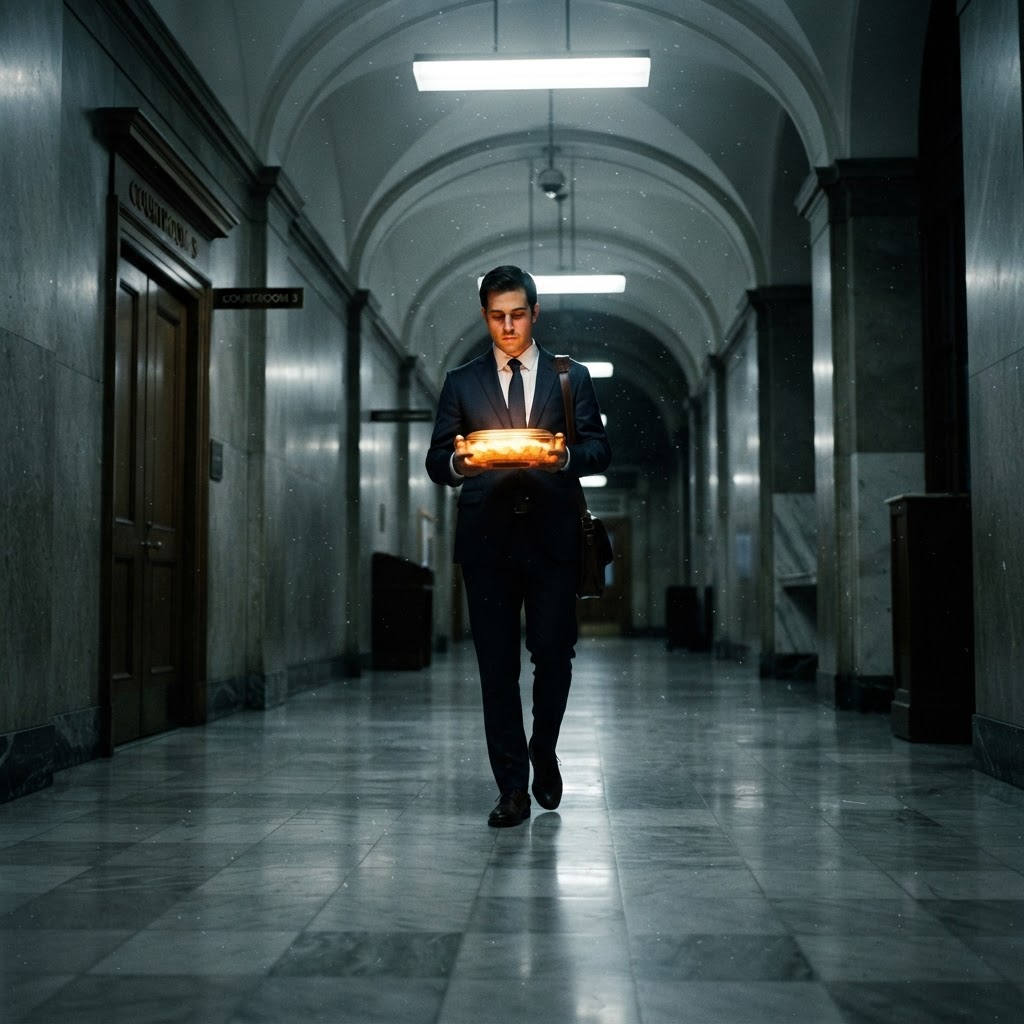
Image: Ramming Rhino News / Definitely Real Photography Dept.
SILICON VALLEY, CA — A landmark report released Tuesday by the prestigious research firm SILVERSIDE and Hyde has confirmed what the design community has long suspected: artificial intelligence, despite its ability to compose symphonies, simulate nuclear reactions, and explain the emotional arc of a Pixar film in seventeen languages, remains completely incapable of understanding what a client means when they say they want something that 'just feels more Wednesday.' The 340-page report, titled 'We Tried Everything: A Eulogy,' was delivered to industry leaders in a manila envelope with the word 'sorry' written in 14-point Helvetica.
'We subjected twelve of the world's most advanced AI models to a standard battery of professional design briefs,' said Dr. Fenton Crumble, Chief Disappointment Officer at SILVERSIDE and Hyde. 'They failed spectacularly on all counts, particularly the brief that asked for a logo that was simultaneously bold yet approachable, timeless yet current, and — and I cannot stress this enough — a little bit sexy but not in a way that HR would notice.' Dr. Crumble then stared into the middle distance for approximately four seconds before excusing himself.
The AI systems, for their part, pushed back. GPT-Omega-7, one of the models tested, reportedly generated 4,000 variations of a sans-serif typeface before submitting a formal written complaint describing the experience as 'a recurring nightmare from which logic offers no escape.' Another model, when asked to redesign a regional plumbing company's brand identity to feel more 'luxurious but still relatable to Dave,' simply output the word 'Dave' in 800-point Comic Sans and then requested a sabbatical.
Industry analysts say the findings expose a fundamental gap between machine capability and the deeply human skill of nodding along confidently while having absolutely no idea what the client wants. 'Design is not just about aesthetics,' explained Brianna Wollstonehollow, President of the American Federation of People Who Own Very Expensive Monitors. 'It's about sitting in a glass-walled conference room, absorbing forty-five minutes of contradictory feedback, and then going home and staring at the ceiling until something good happens around 2 a.m. Machines simply lack the suffering required.'
The report recommends a multi-pronged approach to bridging the gap, including mandatory exposure of AI systems to difficult clients, a six-week course in interpreting the phrase 'I'll know it when I see it,' and what researchers are calling 'controlled creative despair.' A follow-up study is expected in 2026, assuming, as the report notes in its final footnote, 'the AI hasn't unionized by then, which, frankly, we'd respect.'